
A dog loose near a busy road is every owner's nightmare. Most escapes happen in one of four ways: under the fence, over it, through a gap or out an open gate. Here's how to close off each one.
Diggers: block the bottom
- Bury welded wire or chain-link along the fence line, bent outward into an L shape, so a digging dog hits wire.
- Pour a concrete strip or lay pavers or large rocks along the fence line where your dog likes to dig.
- Keep the gap under the pickets small. Small dogs can squeeze under a surprisingly low gap.
Jumpers and climbers: go taller and smoother
- For athletic or large dogs, a 6 ft privacy fence is the safest choice. Four feet is fine for most small and older dogs.
- Put the rails on your side facing in, so the outside face is smooth. On the inside, keep grills, wood piles and planters away from the fence. Dogs use them as a launch pad.
- A solid fence also helps dogs that bolt after things they can see, like squirrels, other dogs or bikes.
Gaps: check the weak spots
- Look along the bottom for low spots where the ground dips on a slope.
- Check the gaps beside gates and where a new fence meets the house or a neighbor's fence.
- On split rail fences, add welded wire mesh between the rails.
Gates: the number-one escape route
Kids, delivery drivers and guests all forget to latch gates. Use self-closing hinges and a latch that catches on its own. Put a lockable latch on gates people don't need to use. A gate that sags and won't latch is an escape waiting to happen, so fix it early.
Best fence types for dogs
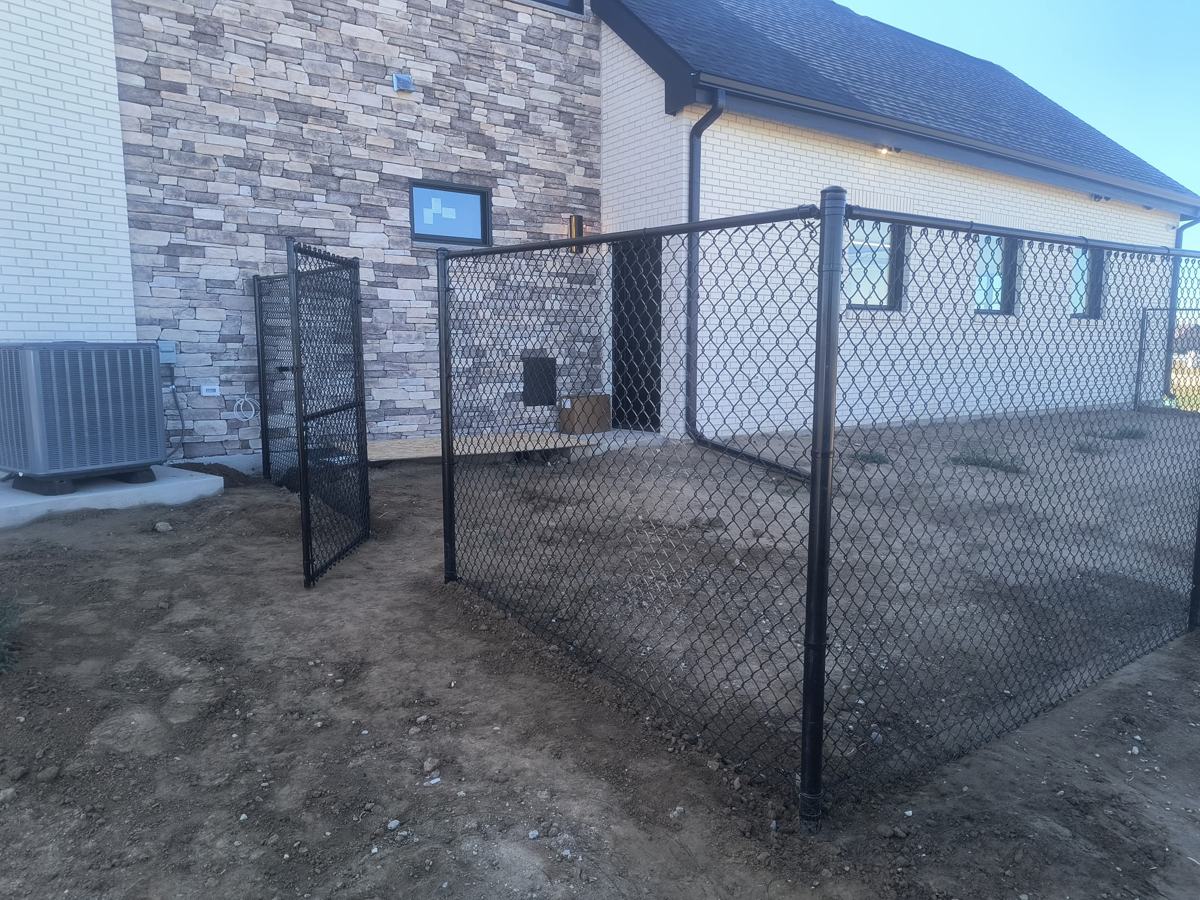
Cedar privacy and vinyl fences are best for dogs that jump or react to what they see. Chain-link is tough, affordable and great for a dedicated dog run or kennel. Split rail with wire mesh works for calm dogs on bigger lots.
Get a ballpark in two minutes with our fence cost calculator, or ask for a free estimate. Tell us about your dog and we'll design the fence around them.