
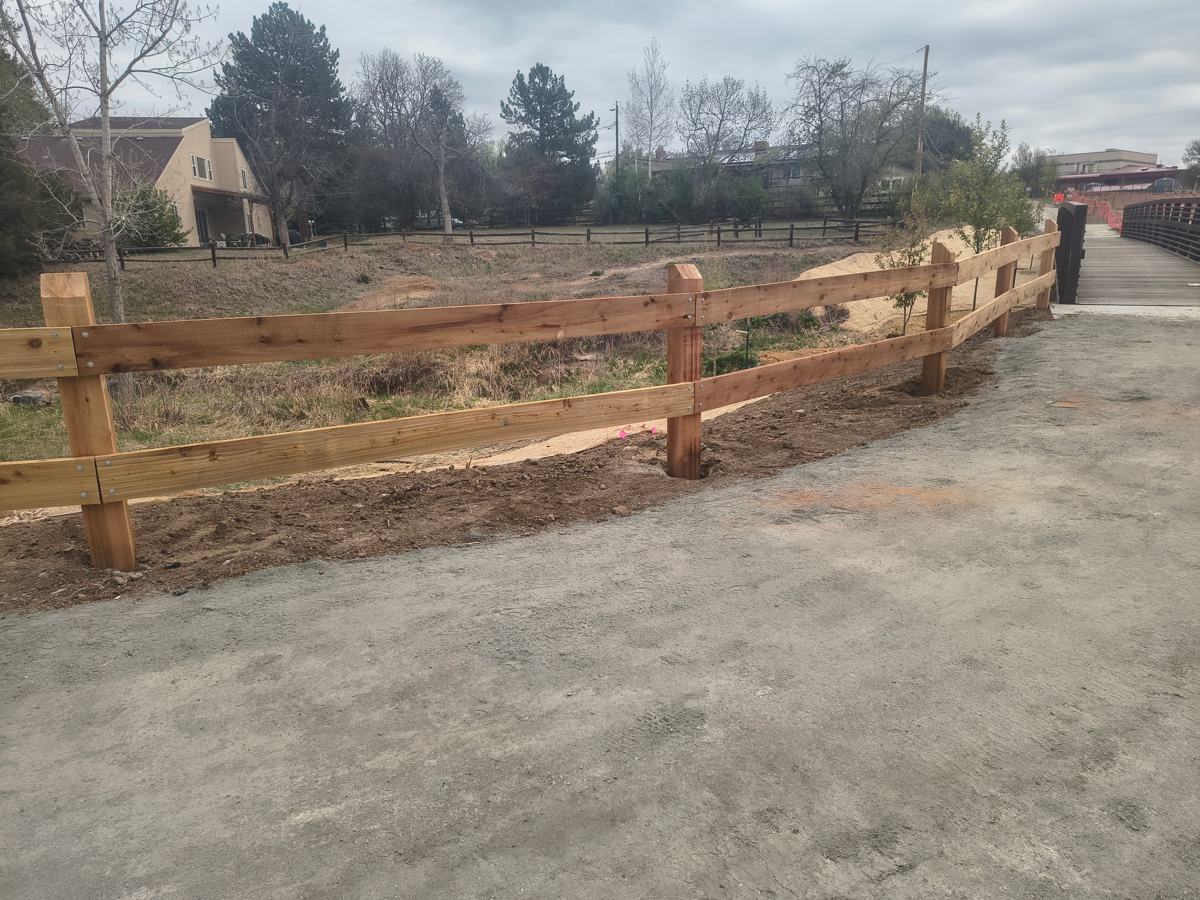
A fence is a lot of material, and most of it sits outdoors for decades next to your lawn and garden. If you want to make a lower-impact choice, here's what really matters, without the greenwashing.
Wood: where it comes from matters
- Look for certified wood. FSC (Forest Stewardship Council) certification means the wood came from a forest managed to set standards. Ask your supplier what's available. It isn't always stocked, but it can often be ordered.
- Closer is better. Western red cedar comes from the Pacific Northwest and western Canada. Japanese cedar pickets are a good budget wood, but they're usually imported from overseas, which means more shipping.
- Local and reclaimed options. Some Colorado mills sell locally harvested wood, including beetle-kill pine salvaged from forests hit by the pine beetle. Reclaimed barn wood and old fence boards can also be reused for accents, gates or planter boxes.
- Make it last. The greenest fence is the one you don't have to replace. Good posts, proper footings and regular stain do more for the environment than almost any material choice. See how to make a cedar fence last.
Composite and recycled-content fencing: pros and cons
Composite fencing is usually made from wood fiber mixed with recycled plastic.
- Pros: It uses recycled plastic that might otherwise go to a landfill. It never needs stain, it doesn't rot, and it can last a long time.
- Cons: It costs more up front. It's hard to recycle at the end of its life because the wood and plastic are mixed together. Like any plastic product, it can shed small amounts of plastic as it weathers in strong sun.
Vinyl is long-lasting and maintenance-free, but it's made from PVC, so it isn't a green choice in itself. Steel is heavy to make but very long-lasting and widely recycled. See steel fencing.
Finishes that are easier on your garden
If you grow food or flowers along the fence, the finish matters.
- Low-VOC, water-based stains give off fewer fumes and clean up with water.
- Natural oil finishes made from linseed or tung oil soak into the wood. They need recoating more often than synthetic stains, but they're a good choice next to garden beds.
- Leave cedar bare. Cedar's natural oils resist rot. Left unstained, it weathers to silver-gray, and you skip the chemicals entirely.
- Apply carefully. Lay a tarp over beds while staining, and don't spray on windy days.
- Treated lumber near edible beds. Today's pressure-treated wood no longer uses arsenic, but some gardeners still prefer cedar or a liner between treated wood and vegetable soil.
Low-impact building
- Size the job right so you don't over-order and waste material.
- Recycle old metal. Chain-link and steel posts from a tear-out can go to a scrap recycler instead of the landfill.
- Use the minimum concrete the post needs, and plan post spacing to avoid extra posts.
- Protect tree roots by moving the fence line or post holes slightly around large roots.
Want a greener fence? Tell us at your free estimate and we'll talk through materials, finishes and what's available from local suppliers. Or price options first with our fence cost calculator.