
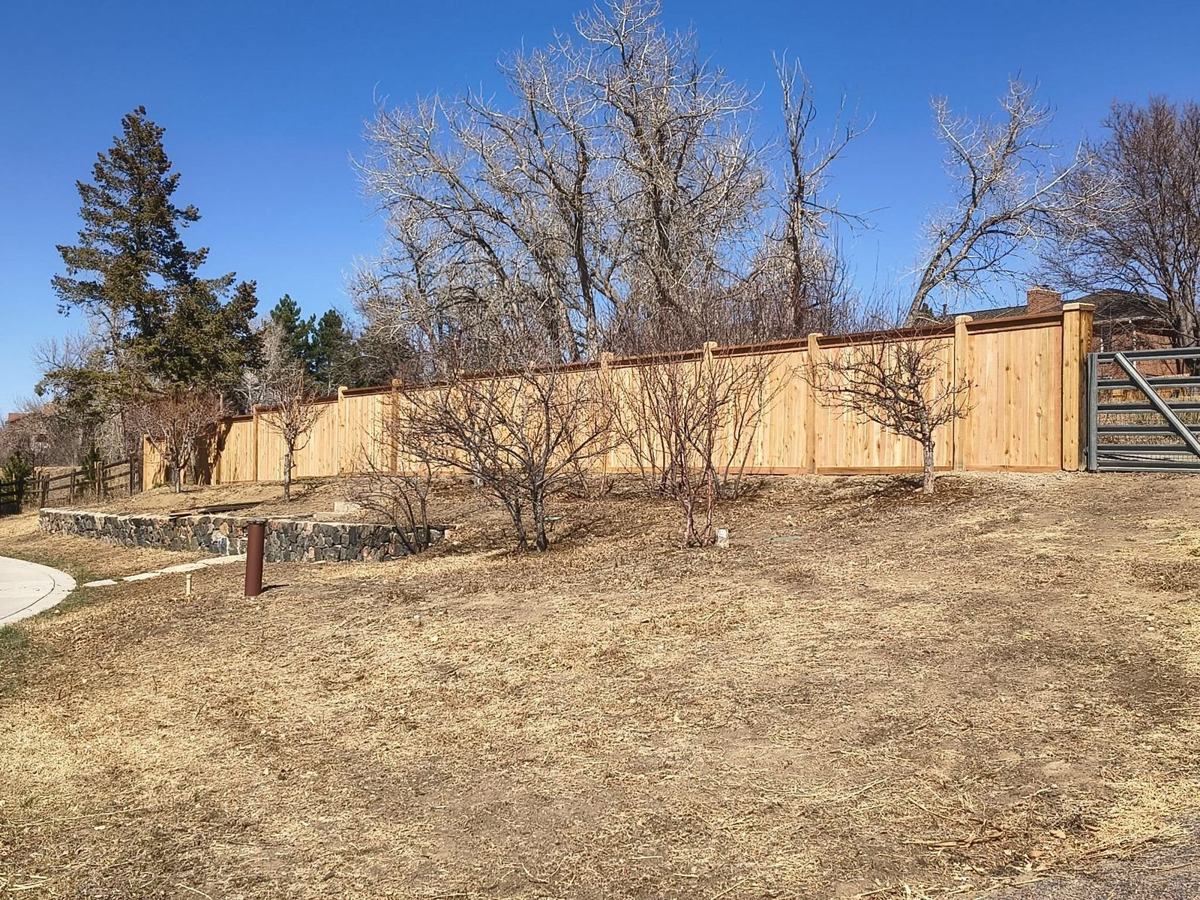
When a fence leans, sags or blows over, the boards are rarely the problem. It's the posts and what they're sitting in. Soil along the Front Range is some of the toughest in the country for fence posts, so it's worth understanding before you build. How the post is set matters just as much as the soil, and one common shortcut can rot a post in a few years. See teacupping and why fence posts rot early.
Expansive clay: the slow push
Much of the Denver Metro area, including Erie, Broomfield, Lafayette and the northern suburbs, sits on clay that swells when it's wet and shrinks when it dries. Every wet spring and dry summer, that clay squeezes and loosens around each post. Over a few years, shallow posts work loose and start to tilt.
Frost heave: the winter lift
Water in the soil freezes and expands in winter. If a post's footing stops above the frost line, the frozen ground can lift it a little every year. Most Denver-area building departments use a frost depth of 36 inches, and Weld County uses 30 inches.
Shallow bedrock: the hard stop
In the foothills, along the hogback and in pockets of Boulder County, bedrock or claystone can sit just a couple of feet down. A normal post-hole digger won't get through it. The job needs a skid steer with a rock auger or breaker, which adds equipment rental and time. It's better to know that before you get a quote than halfway through the install.
How we set posts
- Posts go about 3 feet into the ground and are set in concrete.
- Posts are spaced about 8 feet apart on privacy fences, so each one carries a reasonable share of wind load.
- Concrete is crowned at the top so water runs away from the post instead of pooling against it.
- Gate posts get extra attention, because a sagging gate is almost always a weak post.
Check your own soil in seconds
Our fence cost calculator looks up USDA soil survey data for your address. It tells you if you're on heavy clay or shallow bedrock, and it adds rock equipment to the estimate when needed. If your current fence is already leaning, see our fence repair page. Resetting posts is often cheaper than you'd think.