
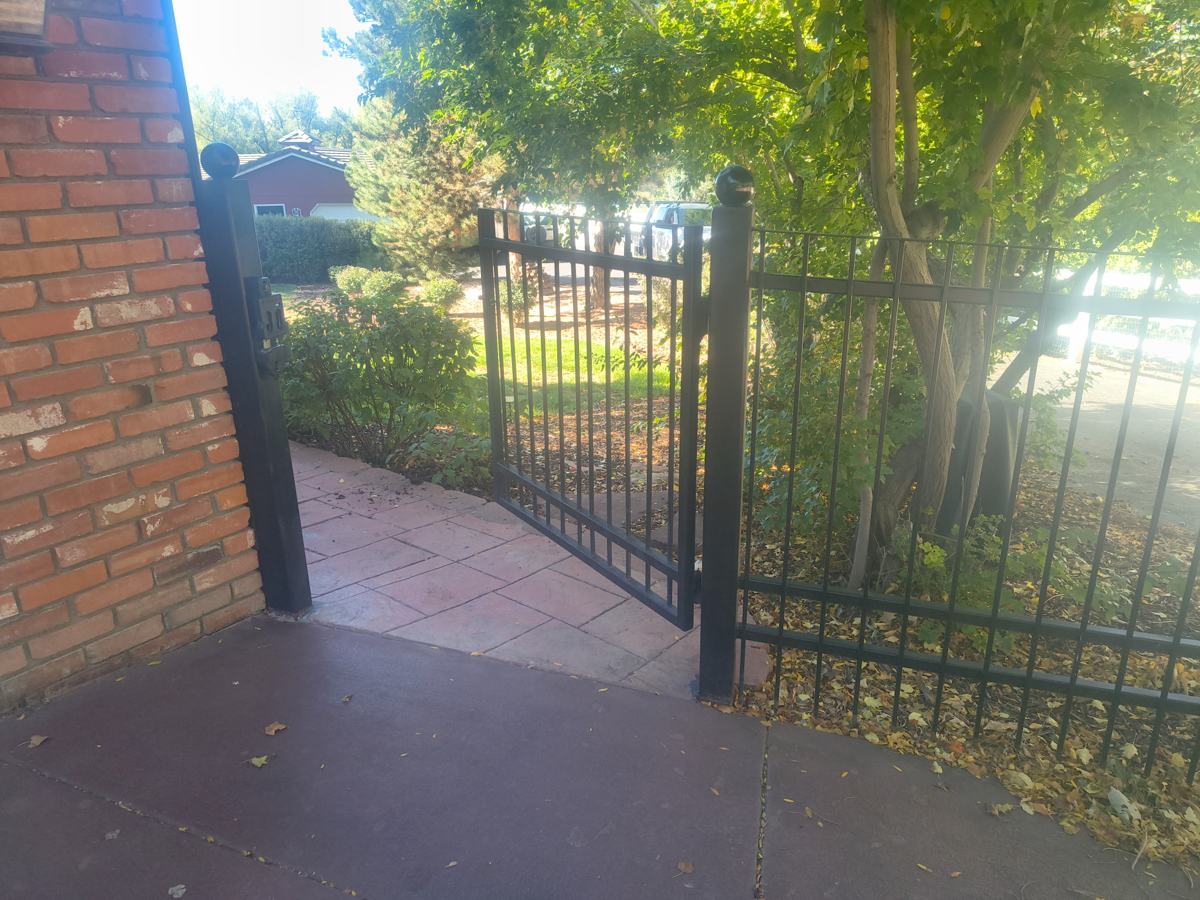
If you're adding a pool, an above-ground pool or a spa, most Colorado cities will require a barrier around it. Most Front Range cities base their pool barrier rules on the International Residential Code or the International Swimming Pool and Spa Code. Your city may have changes, so check with your building department before you build.
Common pool fence requirements
- Height: at least 4 feet (48 inches), measured on the outside, away from the pool.
- Gaps: openings small enough that a 4-inch ball can't pass through.
- Bottom gap: usually no more than 2 inches between the bottom of the fence and the ground.
- No easy footholds: horizontal rails on the outside can work like a ladder, so they're limited.
Gate rules
- Gates must be self-closing and self-latching.
- Gates usually must open outward, away from the pool.
- The latch must be high enough that a small child can't reach it, usually at least 54 inches, or placed on the pool side with no gap near it.
Good fence choices for pools
- Vinyl: smooth, easy to clean, no splinters and no rails to climb on the outside. See vinyl fencing.
- Steel: clean lines with vertical pickets spaced to code. See steel fencing.
- Cedar privacy: works when built with the rails on the pool side and no climbable gaps.
Hot tubs and above-ground pools
Rules for spas and above-ground pools vary more. Some cities accept a locking safety cover on a hot tub, and some above-ground pools count their own walls as part of the barrier. Ask your city.
Permits and HOA
A pool barrier is often reviewed with the pool permit. See permits, HOA rules and 811 and height rules by town.
This is general information. Your city's adopted code and inspector decide what passes.
Ask for a free estimate and we'll build to your city's rules.