
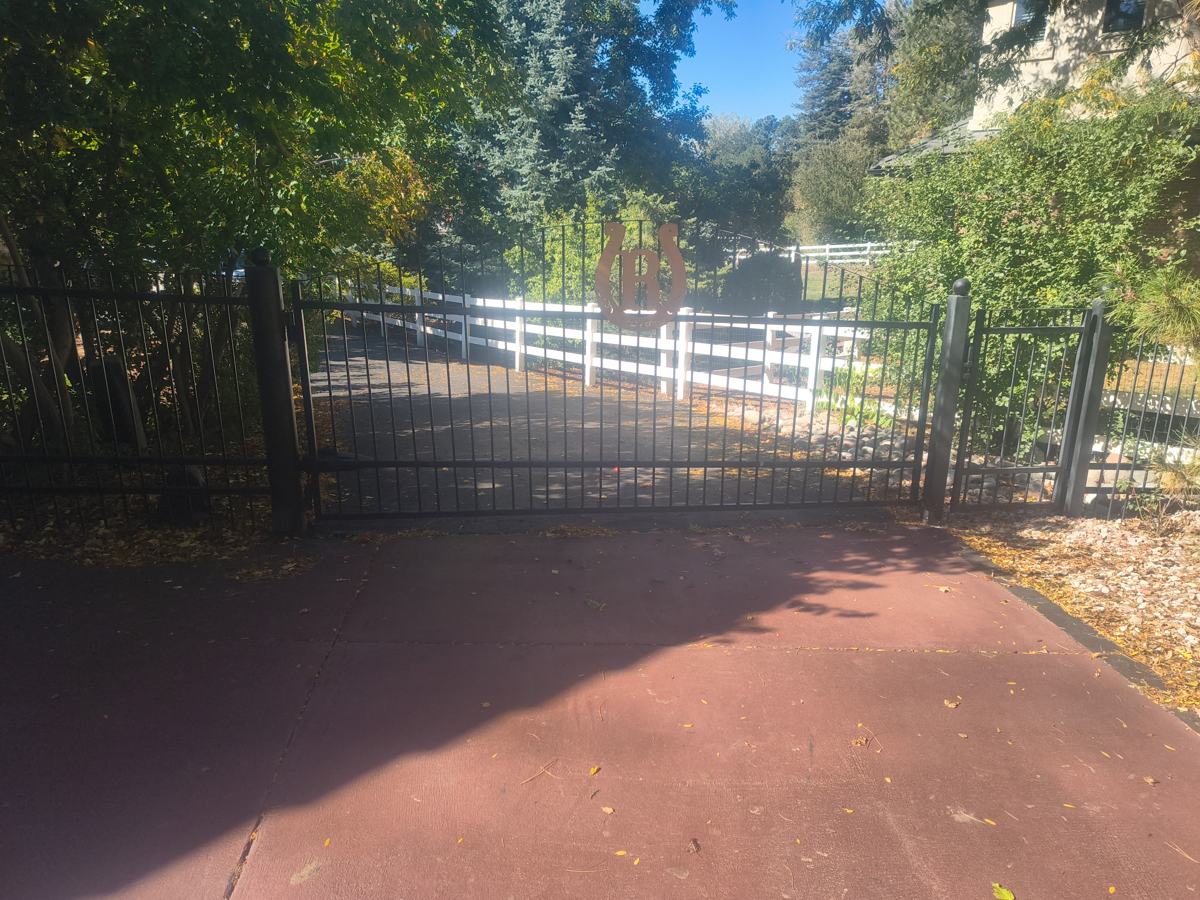
An RV, boat or trailer gate is the biggest, heaviest gate on most properties. It's also the one most likely to sag if it isn't built right. Here's how to plan one.
How wide should an RV gate be?
Measure your widest vehicle, mirrors included, then add room to swing in at an angle. Many RV and trailer gates are about 12 to 16 feet wide. If you have to turn in from a narrow street or alley, go wider. Measure the turn, not just the opening.
Single or double gate?
- Double gates split the opening into two leaves. Each leaf is lighter, they need less swing room, and you can open just one side to walk through.
- Single gates look clean but need a lot of swing room and put more weight on one post.
Double gates need a drop rod (cane bolt) on one leaf that drops into the ground or a sleeve to hold it closed.
Wood or welded steel?
Wood gates match a wood fence, but wide wood gates fight gravity. They need heavy posts, strong hinges and a brace or anti-sag cable. See fixing a sagging gate.
Welded steel gates hold their shape at wide openings year after year. Tyler is a certified welder and builds custom steel gates on site to fit the opening. See modern steel fencing.
The posts matter most
A wide gate pulls hard on its hinge post. Gate posts should be bigger and deeper than line posts, set with dirt packed in the bottom of the hole and concrete around the sides.
Other things to plan for
- Ground clearance: leave room for the swing, especially if the driveway slopes up or snow drifts there.
- Wind: a big gate acts like a sail. Latch it closed and use a gate stop to hold it open.
- Locks: plan where a lock or padlock hasp goes.
- HOA rules: many HOAs have rules about RV gates and parking. Check first.
See gate installation, or ask for a free estimate and we'll measure your opening.