
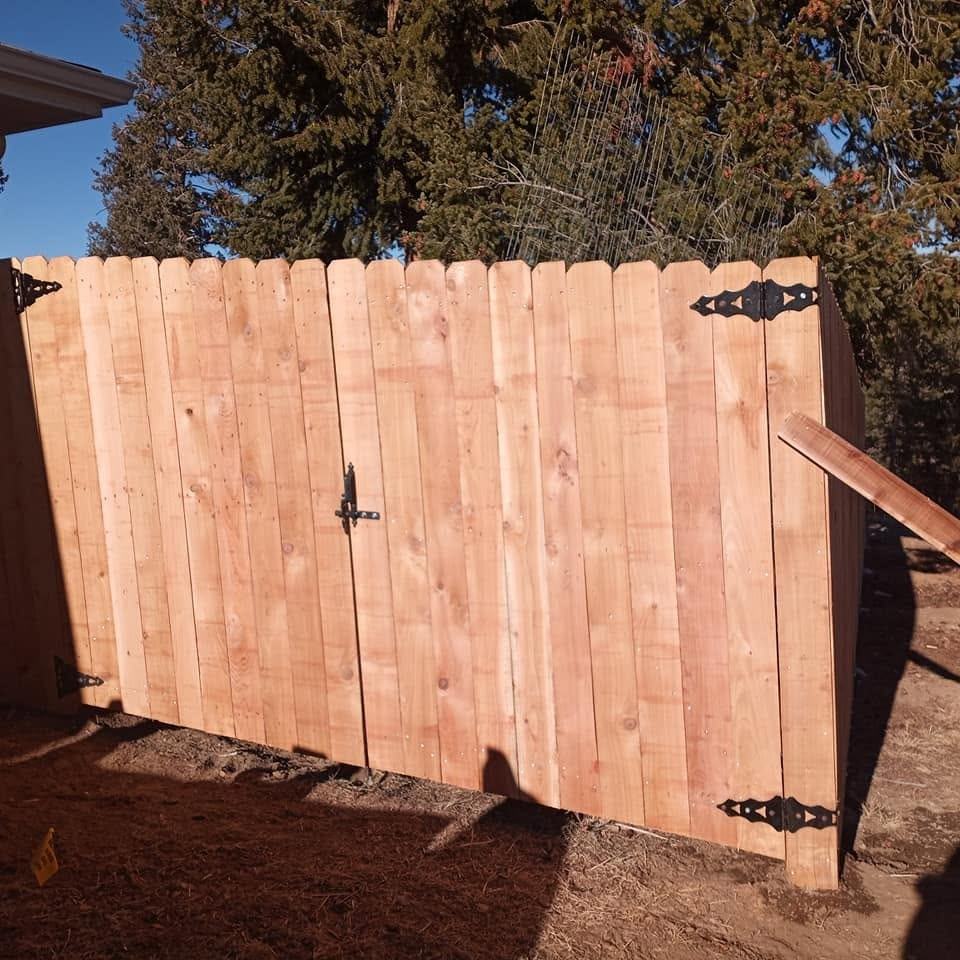
The gate is the hardest-working part of any fence. It swings every day, slams in the wind and carries its own weight on two or three hinges. So it's usually the first thing to start dragging. Here's why it happens and how to fix it.
Why wood gates sag
- Gravity. A wood gate hangs off one side. Over time, the free corner drops and the gate turns into a parallelogram.
- Colorado's dry-wet swings. Wood shrinks in dry months and swells after snow and rain. Every cycle loosens screws and joints a little.
- The hinge post leans. Often the gate is fine and the post is the problem. A post that's working loose in clay soil tips the whole gate.
- Undersized hardware. Light hinges and short screws can't carry a wide or tall gate for long.
- Wind. A gate left unlatched in a windstorm gets slammed open and shut, which pulls the hinges loose.
Step 1: Check the post first
Close the gate and push on the hinge post. If it moves, no amount of gate adjustment will fix it for long. The post needs to be reset or replaced, ideally in deeper concrete. See fence posts in Colorado clay and rock.
Step 2: Tighten or upgrade the hinges
Tighten every hinge screw. If screws spin, use longer exterior screws or through-bolts. For wide or heavy gates, upgrade to heavy-duty strap hinges, which spread the load across more of the gate, or adjustable hinges that let you raise the gate a little after it settles.
Step 3: Add an anti-sag kit or brace
An anti-sag kit is a steel cable with a turnbuckle. It runs diagonally from the top corner on the hinge side down to the bottom corner on the latch side. Tighten the turnbuckle a little at a time until the latch corner lifts back into place. It's inexpensive, takes about 20 minutes and works on most wood gates.
A wood brace does the same job the other way. A board runs from the bottom corner on the hinge side up to the top corner on the latch side, so it pushes the free corner up. Most gates we build have one. If the brace runs the other direction, it won't stop the sag.
Step 4: Realign the latch
Once the gate is square again, move the latch so it catches cleanly without lifting or pushing the gate. A self-latching gravity latch and self-closing hinges keep the gate from being left open, which matters if you have dogs. See dog-proof fencing.
Step 5: Give it clearance
Leave about 2 inches under the gate, more if the ground slopes up in the swing path or snow drifts there. A gate that scrapes the ground wears out its hinges fast.
When to switch to a steel-framed gate
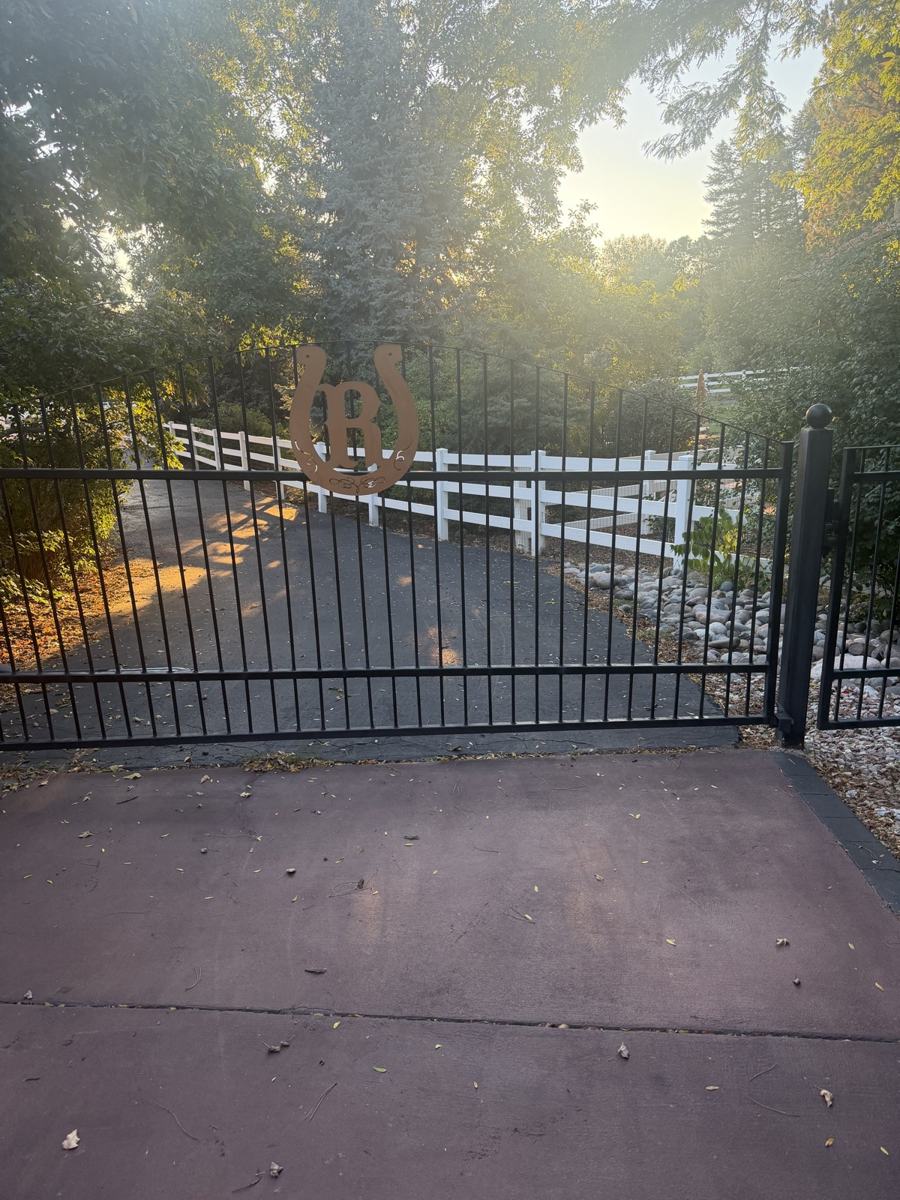
If a gate keeps sagging after you've fixed the post, hinges and brace, or if it's wider than about 5 feet, it may be time for a steel gate. A welded steel gate holds its shape no matter how dry or wet the season. For double drive gates, steel is often the only way to keep both leaves meeting in the middle for years. Tyler is a certified welder, so we build these to fit your opening. See gate installation and steel and custom metal fencing.