
Building a fence on the line between two yards is part construction project and part diplomacy. Most neighbor fence fights come from one person assuming something the other didn't. Here's how shared fences work in Colorado, and how to handle the conversation.
This is general information from a fence contractor, not legal advice. For a real dispute, talk with a Colorado real estate attorney.
Who owns a fence on the property line?
In most cases, a fence sitting right on the line belongs to both neighbors. A fence built completely inside one yard belongs to that owner, even if the neighbor enjoys it too. That's why it matters where the posts actually sit. Before you plan anything, find your plat or improvement survey and look for the corner pins. If it's unclear, a surveyor can mark the line, which is cheap compared to moving a fence later.
Your city usually won't settle it for you. Thornton, for example, allows fences on or inside the property line but notes that the city does not verify where property lines are.
Who has to pay for a shared fence?
Colorado has no law that makes neighbors split the cost of a residential fence. The state's cost-sharing rules for partition fences cover farm and ranch land where livestock are kept, not backyards in a subdivision. So for most homeowners, sharing the cost is voluntary.
That said, many neighbors do split it, because both yards get the benefit. Common arrangements:
- 50/50 split on the shared stretch, with each owner paying for their own gates.
- One owner pays more because they want a taller fence, a nicer material or a style the other didn't ask for.
- One owner pays it all and builds it a few inches inside their own line, so it's clearly theirs.
Whatever you agree to, put it in writing. A short signed note or email covering the price, the material, who pays what and when is enough to avoid most arguments.
Which side faces out: "good side out"
Most wood fences have a finished face and a structural side, where the posts and rails show. The usual courtesy is to put the finished side facing out, toward the neighbor or the street. Some cities make that a rule along streets. Aurora's code, for example, says the finished side must face the public right-of-way or private streets and alleys. Many HOAs go further and require finished-side-out on every fence, or require a "good neighbor" style that looks finished from both sides.
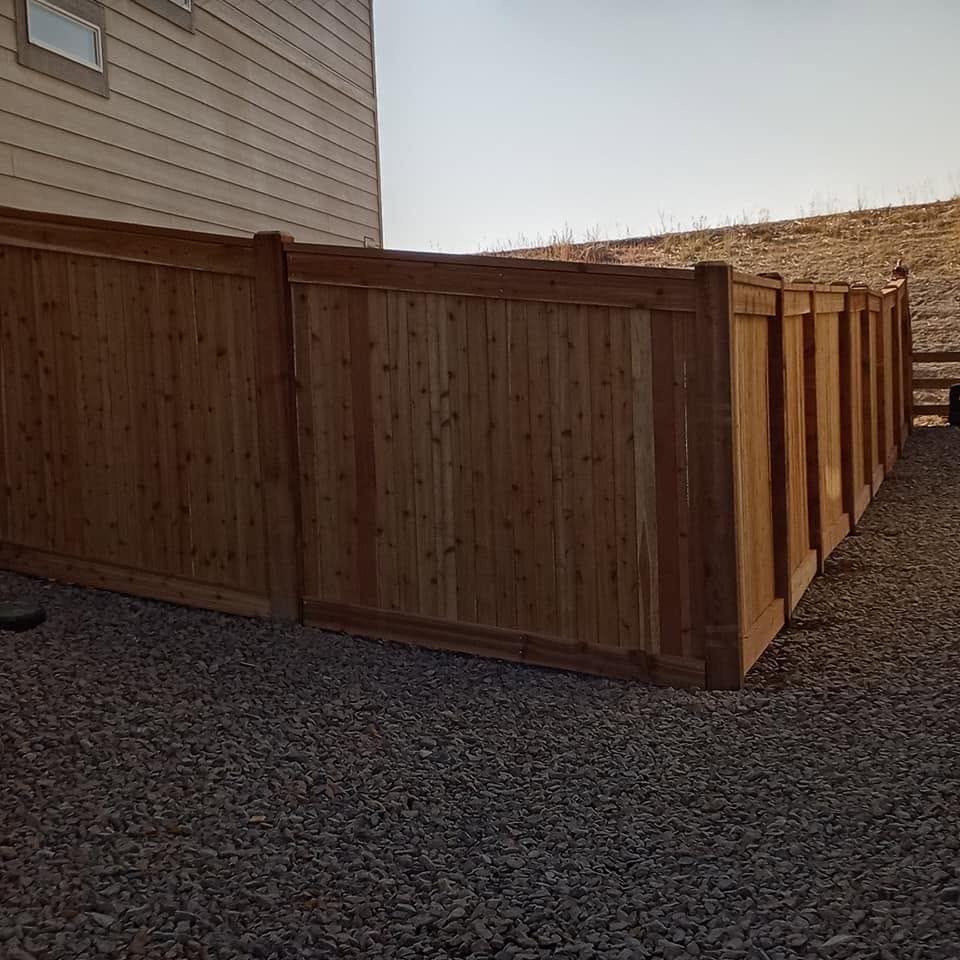
Good-neighbor fences, like shadowbox or board-on-board styles, end this question on a shared line. Both yards get a finished face, and they're often what HOAs want anyway. They use more boards, so they cost a little more.
Replacing an old shared fence: the polite way
- Talk first, in person. Before you get quotes or schedule anything, knock on the door. Nobody wants to find out from a crew in their yard.
- Bring options. Share a quote, a material and a height. Asking "Would you want to split this?" goes over better than "You owe half."
- Agree on the details. Style, height, which side faces whom, gates and timing.
- Plan for pets and kids. Removing a fence leaves both yards open, usually for a day or more. Give your neighbor a date so they can keep dogs inside.
- Check your HOA and city rules. Get approval before work starts. See permits, HOA approval and 811.
- Think about landscaping on their side. Vines, shrubs and sprinkler lines along the old fence may get disturbed. Agree ahead of time on what gets moved or trimmed.
Once the old fence is down, haul-away is part of the job. We price removal by the trailer load to the dump, so neither neighbor is stuck with a pile of old boards.
What if a neighbor won't help pay?
Because Colorado doesn't require cost sharing for residential fences, you usually can't force a neighbor to pay. Your options:
- Offer a smaller ask. Some neighbors will help with materials, labor or a single section even if they won't split the whole job.
- Try mediation. Many Front Range cities and counties offer free or low-cost community mediation for neighbor disputes.
- Build it yourself, on your side. Set the new fence a few inches inside your property line. It's then entirely yours, you choose the style, and the neighbor can't object to how it's built (city and HOA rules still apply).
- Don't remove a shared fence without agreement. If the fence is on the line, taking it down alone can create a dispute of its own. Get the agreement in writing first.
If the old fence is leaning or falling into your yard, take photos and talk to the neighbor before it fails completely. A failing fence is often easier to fix than people expect. See why fences lean and our fence repair page.
Need a hand with the conversation?
We can meet you and your neighbor on site, measure the shared line and give you one written quote for the shared stretch. Many neighbors find it easier to split a number they both saw at the same time. Ask for a free estimate, or price it first with our fence cost calculator.