
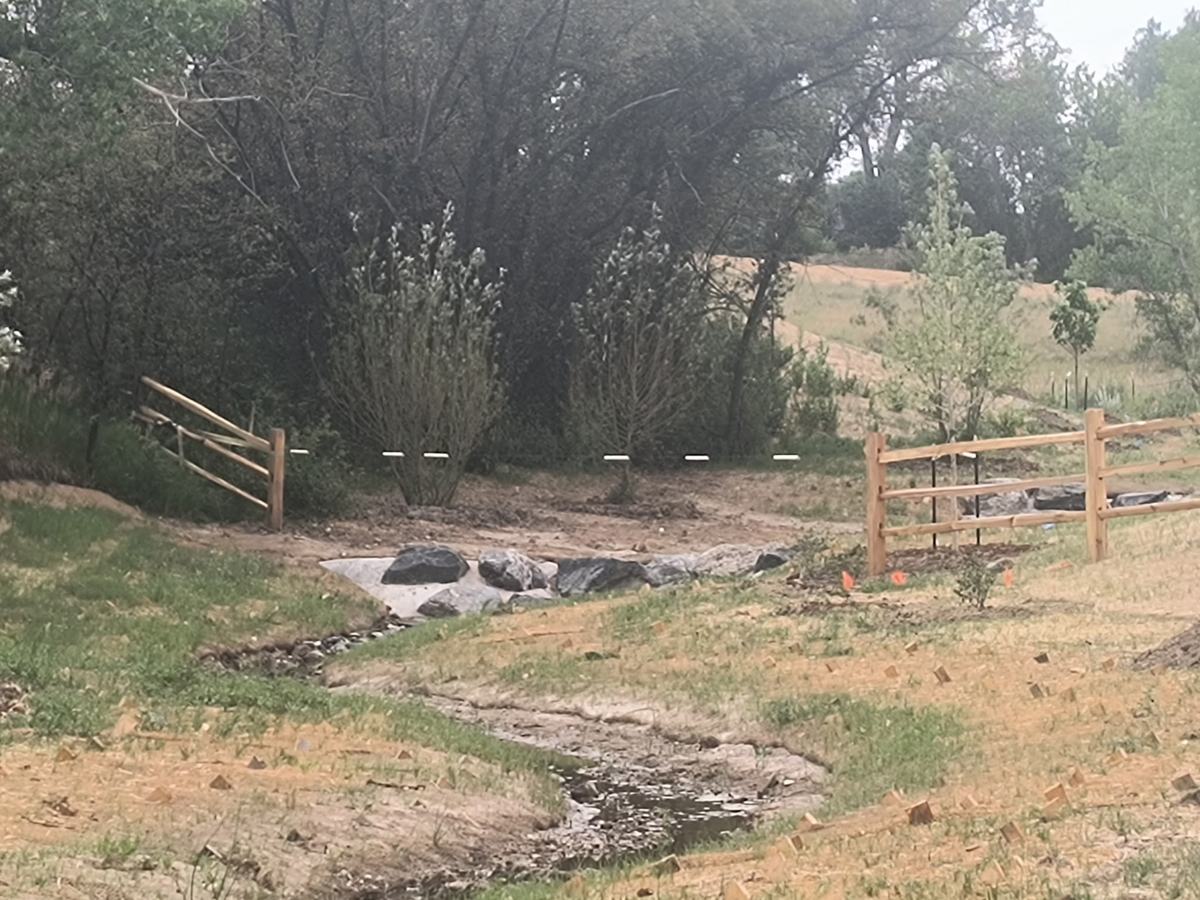
Split rail is the classic Colorado fence. It marks a property line, frames a yard and fits open space without blocking the view. It's also one of the most budget-friendly fences per foot.
2-rail or 3-rail?
- 2-rail stands about 3 to 3½ feet tall. It's a good property-line marker and a common choice along open space.
- 3-rail stands about 4 feet tall and looks a bit more substantial. It's better for horses and a better base for dog wire.
Adding wire mesh for dogs
Split rail on its own won't hold most dogs. Attaching welded wire mesh to the inside of the rails keeps them in while keeping the open look. Black-coated wire blends in best. For diggers, the bottom edge can be buried a few inches. See dog-proof fence ideas.
Open space and HOA rules
Many lots in Erie, Superior, Broomfield and other towns that back onto open space or trails must use an open fence like split rail. Check your HOA before you build. See permits, HOA rules and 811.
How split rail handles Colorado weather
Wind passes straight through a split rail fence, so it rarely blows over. Snow doesn't pile against it. The rails sit in holes in the posts, so they're easy to replace if one cracks.
Where split rail works best
- Front yards, where cities limit fence height and openness. See height rules by town.
- Acreage and long property lines.
- Garden borders and driveway edges.
- Backyards on open space.
Making it last
Keep soil and mulch off the bottom of the posts, and replace a cracked rail before it drops. Most split rail is cedar, which weathers to a soft gray on its own.
See split rail fencing for photos, or price your fence in two minutes.