
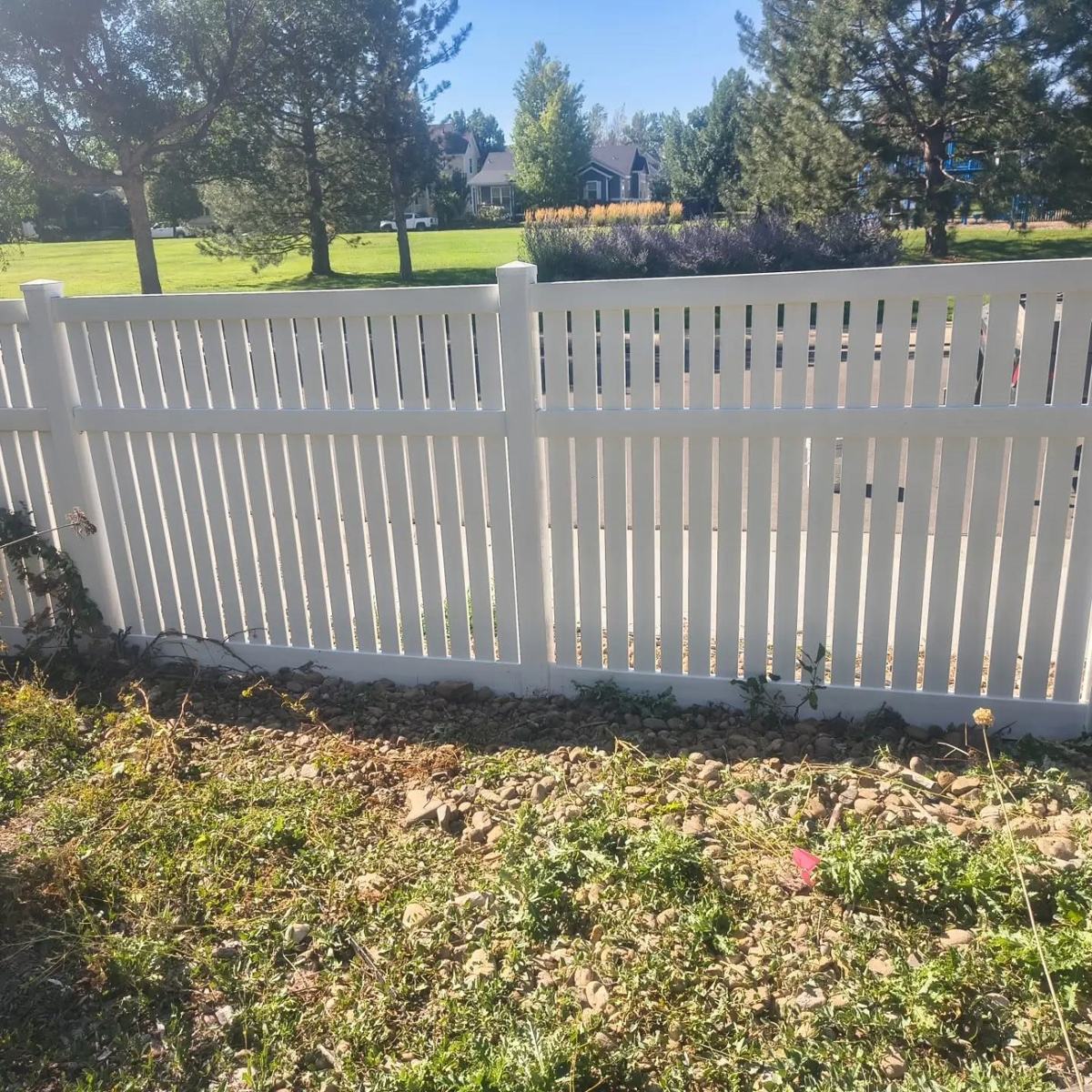
Vinyl fences are popular because they never need stain. But people often ask if vinyl cracks in a Colorado winter. The honest answer is that vinyl gets stiffer in the cold, and a hard hit in freezing weather can crack it. Normal cold on its own usually doesn't.
What actually cracks vinyl
- Impacts in the cold. A snowblower, a thrown ice chunk, a car door or a ball hitting a frozen panel.
- Hail. Large hail can crack or hole thin panels.
- Snow piled against it. Heavy, wet snow plowed or shoveled against the fence puts a lot of pressure on the panels.
- Thin, cheap panels. Thinner vinyl is more likely to crack and sag.
Sun and heat
Colorado's high-altitude sun is strong. Quality vinyl has UV protection to keep it from yellowing or getting brittle. Vinyl also expands in summer heat and shrinks in winter, so a good install leaves room for that movement.
How to protect a vinyl fence in winter
- Don't pile shoveled or plowed snow against it.
- Keep snowblowers and ice scrapers away from the panels.
- Knock heavy snow off gently with a broom, not a shovel.
What to look for in a quality vinyl fence
- Thicker panels and rails, with metal reinforcement in the bottom rail and in gate frames.
- UV protection.
- Posts set deep enough to handle wind. See wind-resistant fences.
If a panel cracks
Most vinyl fences are built in sections, so one cracked board or panel can usually be replaced without redoing the fence.
Vinyl or cedar?
Vinyl costs more up front and needs almost no upkeep. Cedar costs less up front and needs stain every few years. See cedar vs vinyl vs chain-link and our vinyl fencing page.