
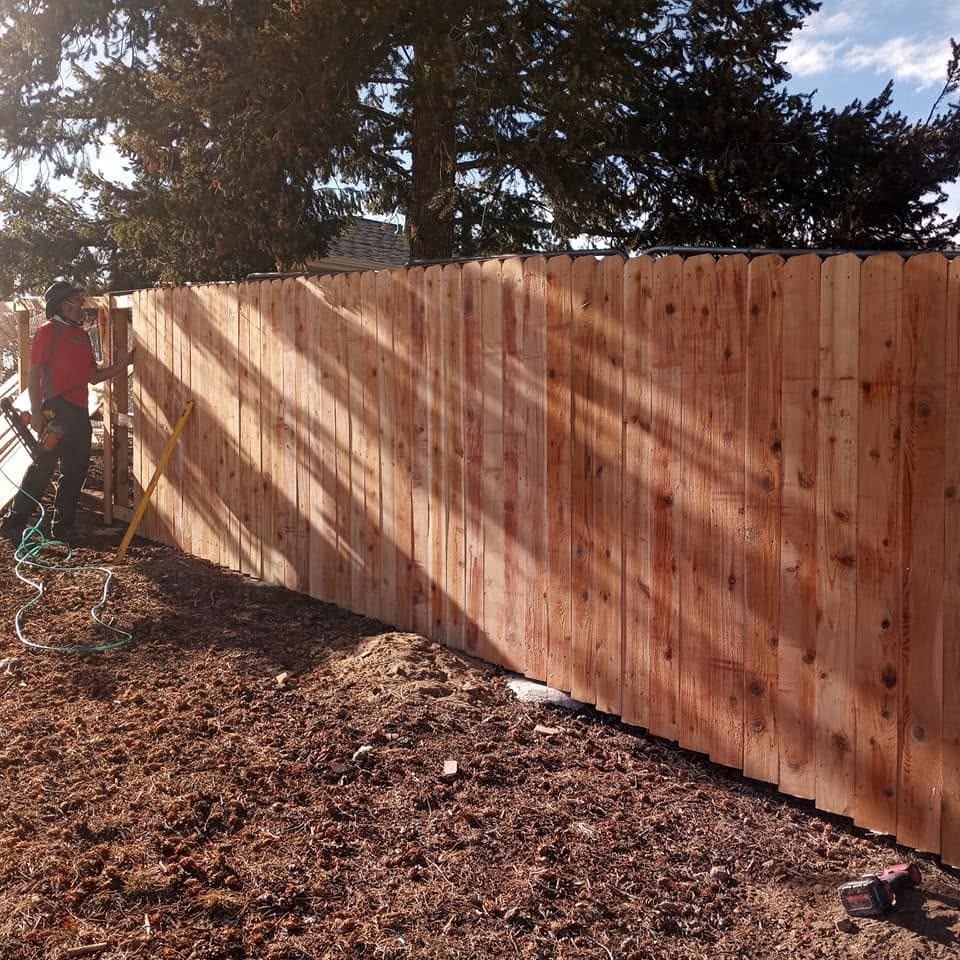
Front Range wind is no joke. In December 2025, gusts reached 109 mph at the NCAR Mesa Lab in south Boulder and 102 mph at Rocky Flats. A solid 6 ft privacy fence acts like a sail in that kind of wind. Every square foot of boards pushes on the posts, and the posts are what give out. Here's how to build a fence that stays standing.
Why fences fail in wind
A 6 ft solid fence catches wind across its whole face, and all of that force ends up at the bottom of each post. The fence fails at its weakest point, which is almost always one of these:
- Posts snap at ground level, often where wood has started to rot just above the concrete.
- Footings rock loose in clay soil, so the whole section leans and then lies down.
- Posts are too far apart, so each one carries too much fence.
Tighten the post spacing
Most privacy fences are built with posts 8 feet apart. On exposed lots, like open-space edges, hilltops, corner lots and anywhere in the foothill wind corridors from Boulder down through Golden, moving to 6-foot centers makes a real difference. Each post carries 25% less fence, so it takes less load in a gust. It adds a few posts and some concrete per run, which is usually a small part of the total price.
Go deeper with the footings
We set posts about 3 feet deep in concrete. On a windy lot, a wider hole and more concrete around each post gives it more to push against. Gate posts and end posts carry the most load and get the most attention. See fence posts in Colorado clay and rock for how soil plays in.
Steel posts: the strongest upgrade
We install PostMaster steel posts from Master Halco. They're galvanized steel posts built to be used with wood fences. You keep the cedar pickets and rails, but the posts underneath are steel, so they can't rot at the ground line. Master Halco says the posts stand up to winds over 81 mph and won't twist, rot, warp or crack like wood posts, and backs them with a lifetime limited warranty.
- From the neighbor's side or the street, the steel is hidden behind the boards or trimmed in cedar.
- They cost more than 4x4 cedar posts, but you're unlikely to ever replace them.
- They pair well with 6-foot spacing on the windiest lots.
Ask about PostMaster steel posts at your estimate. On exposed lots, they're often the best money you can spend.
Let some wind through
A fence that lets a little air pass carries far less load. Wind-friendly styles still give you privacy:
- Shadowbox / board-on-board. Boards alternate on each side of the rails with small gaps between them, so air passes through and both sides look finished.
- Lattice or slatted top sections. A solid 5 ft fence with a 1 ft lattice or slat topper breaks up the wind across the top of the fence.
- Horizontal slats with spacing. A modern look, and the gaps let gusts through.
- Lower fence in the windiest spots. Sometimes the best answer is 5 ft instead of 6 ft along the most exposed side.
After a big wind
Walk the fence after every windstorm. A post that rocks when you push it should be fixed before the next storm, because a loose post puts extra load on its neighbors. We do fence repair across the Denver Metro area, from resetting a single post to replacing a section.
Want a fence built for your lot's exposure? Price it with our fence cost calculator, then ask for a free estimate and we'll talk through spacing, posts and style on site.