
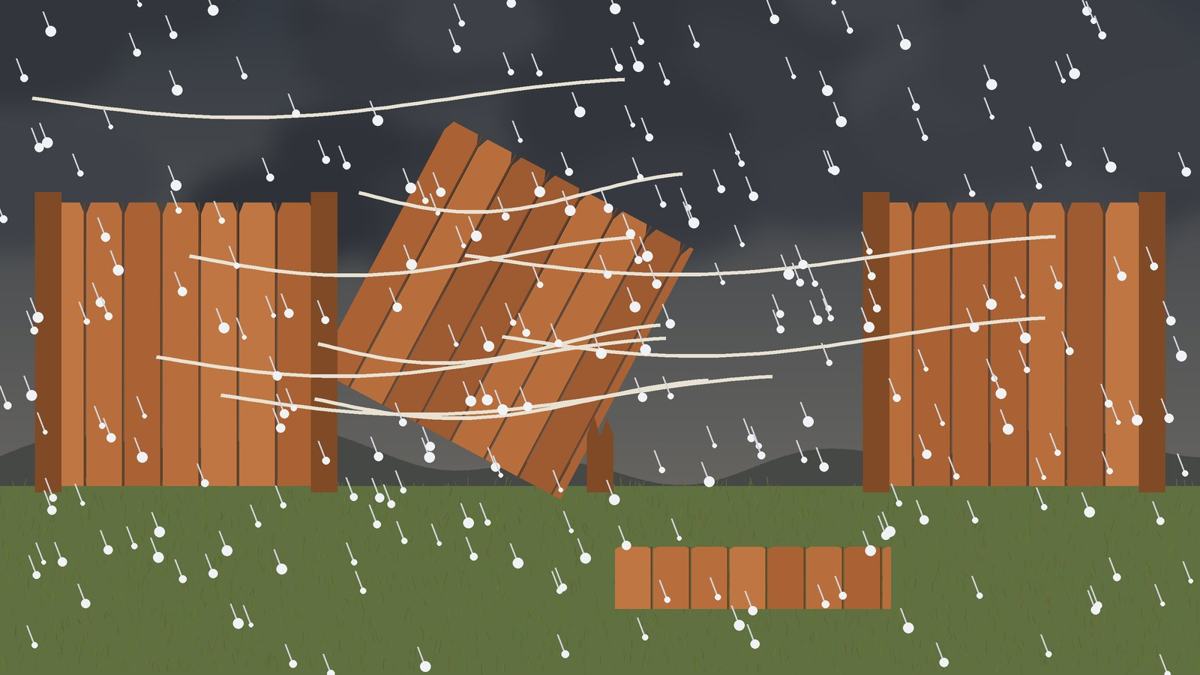
Front Range wind gusts can top 80 mph, and hail can shred boards and dent vinyl in minutes. If your fence is down or leaning after a storm, here's what to do and in what order.
1. Make it safe
- Keep kids and pets away from leaning sections. A loose panel can fall in the next gust.
- Check for downed power lines near the fence. If you see one, stay away and call the utility.
- If your dog relies on the fence, set up a temporary barrier or keep the dog on a leash until it's fixed.
2. Take photos before you move anything
Photograph the whole fence line from a distance, then close-ups of broken posts, snapped boards, hail dents and anything that fell on the fence, like a tree limb. Take a few photos of the sky or the storm itself if you can, and note the date. These photos help with any insurance claim and help us price the repair from a phone call.
3. Prevent more damage
If a section is hanging, you can take it down carefully and set it aside. Don't throw anything away until you've talked to your insurance company, since they may want to see it.
4. Check your homeowners policy
Many standard homeowners policies cover fences under "other structures" for wind and hail damage, after your deductible. What usually isn't covered is a fence that failed from age, rot or poor installation. Every policy is different, so read yours or call your agent. This is general information, not insurance advice.
- Compare the damage to your deductible. If the repair costs less than your deductible, a claim won't pay anything.
- A neighbor's tree fell on your fence? In many cases your own policy handles your fence, even when the tree was your neighbor's. Ask your agent.
- Shared fence? Talk with your neighbor early. Our shared fence guide covers splitting repairs.
5. Get a written estimate
Your insurance company will usually want an itemized estimate from a contractor. We give you a written quote that lists the posts, sections, gates and labor, along with photos of the damage. Contact us to set up a visit.
Why some fences survive storms and others don't
When we look at storm damage, the posts are usually the story. Posts that were too shallow, too small or rotting at the base snap first. When we rebuild, we set posts deep with dirt packed in first and concrete around the sides, and we can use steel posts where wind is worst. See wind-resistant fences for Colorado storms and repair or replace?